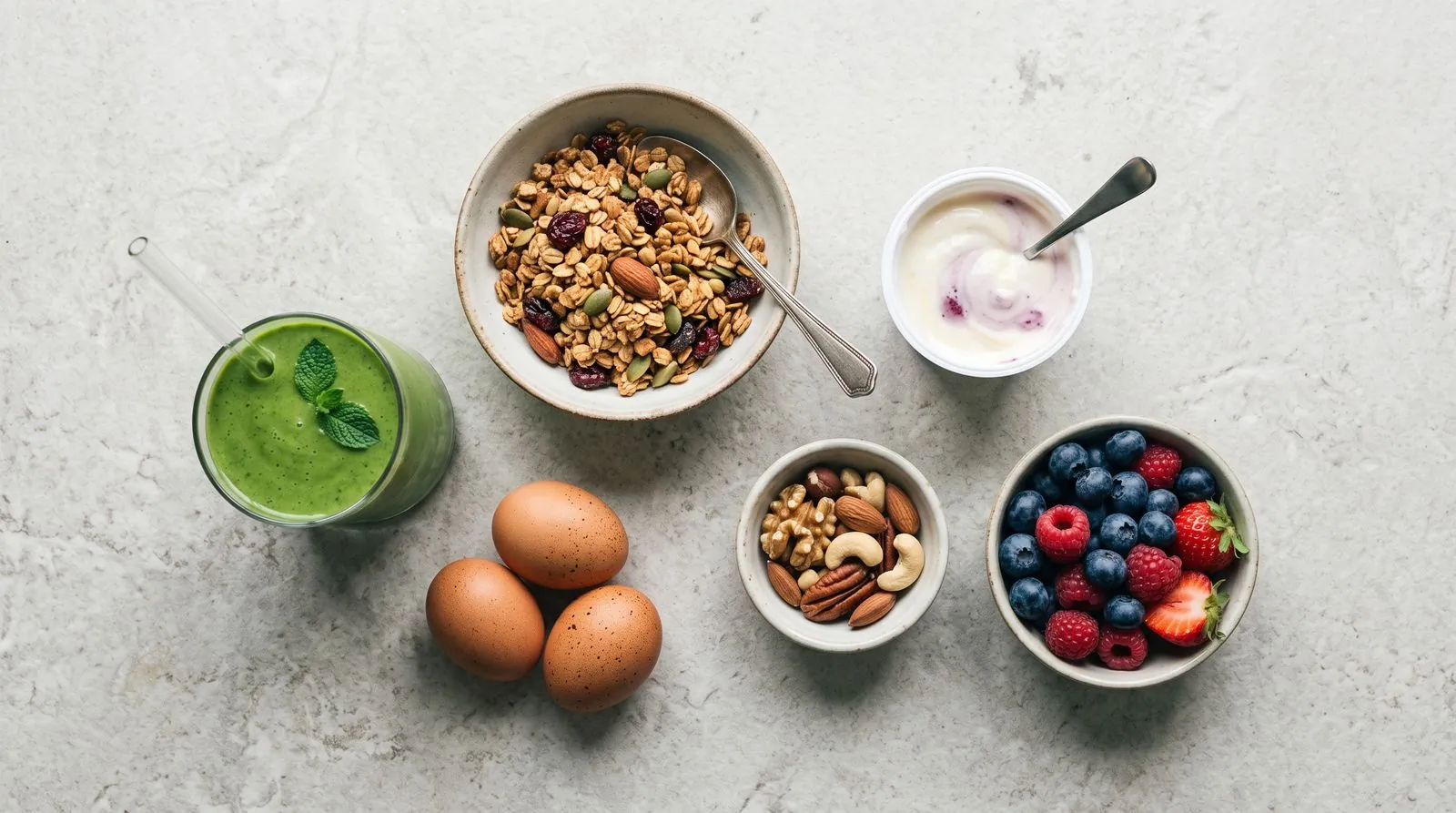
You finish a big bowl of cereal at 7 a.m. By 9, you are hungry again and eyeing the snack drawer.
Another day, you have eggs, some vegetables and a slice of whole grain toast. Lunchtime arrives and you barely noticed the morning go by.
Same person. Similar amount of food. Completely different experience.
The difference is not discipline. It is chemistry. Every time you eat, your digestive system sends a stream of hormonal messages to your brain, and the type of food on your plate shapes what those messages say.
Hunger Is a Conversation, Not a Character Flaw
We often talk about appetite as if it were a matter of self control. But hunger is a biological signal, just like thirst or the urge to sleep.
Your gut, your fat tissue, your pancreas and your brain are in constant communication about how much fuel you have and how much you need. When that communication runs smoothly, eating the right amount feels natural. When the signals get muddled, you can feel hungry even when your body has plenty of energy available.
Understanding the messengers involved makes it much easier to work with them.
Meet Your Appetite Messengers
Ghrelin: the hunger signal. Produced mainly in the stomach, ghrelin levels rise before meals and fall after you eat. Research shows ghrelin climbs in the lead up to regular mealtimes, which is part of why you tend to get hungry at the same times each day.
CCK: the early brake. Cholecystokinin is released in the upper small intestine as food arrives, especially fat and protein. It helps you feel satisfied during the meal itself.
Peptide YY: the lasting signal. Released further along the gut, peptide YY helps reduce appetite in the hours after a meal.
Leptin: the long term fuel gauge. Unlike the others, leptin comes from fat tissue and reflects your overall energy reserves rather than a single meal. (We cover leptin in depth in Why Your Body Fights Weight Loss.)
And then there is the hormone that has taken center stage in recent years.
GLP-1: The Fullness Hormone Everyone Is Talking About
GLP-1, short for glucagon-like peptide 1, is released by specialized cells in your intestine when nutrients arrive. Once in circulation, it does several things at once:
- It slows down your stomach. Food leaves the stomach more gradually, which helps you feel full for longer.
- It talks to your brain. GLP-1 acts on appetite centers in the brain, sending a clear message that you have eaten.
- It helps manage blood sugar. GLP-1 prompts the pancreas to release insulin when blood sugar rises after a meal, and helps quiet the hormone that raises blood sugar.
Researchers are also exploring how GLP-1 influences the brain’s reward system, which may help explain its connection to cravings.
You have probably heard the name because a class of prescription medications is designed to mimic GLP-1’s effects. It is worth knowing the difference, though. The GLP-1 your body makes naturally is broken down within minutes, while those medications are engineered to last much longer.
No meal will act like a prescription drug. But the way you eat can still meaningfully support your body’s own fullness signals, and that can make a real difference in how satisfied you feel from one meal to the next.
Your body already has a built in system for feeling full. The foods you choose decide how well it works.
Where Blood Sugar Fits In
Appetite and blood sugar are closely linked.
When you eat foods that are digested quickly, like white bread, sugary cereals or sweetened drinks, glucose floods into your bloodstream. Your body responds with a surge of insulin to bring it back down. Sometimes the drop overshoots, and blood sugar dips below where it started.
Your brain notices the falling fuel supply and responds the way you might expect: with hunger, often for more quick energy.
In one study, teenage boys were given meals with the same calories but different effects on blood sugar. After the meals that raised blood sugar quickly, they went on to eat considerably more food later in the day than after the slower digesting versions.
Foods that release their energy gradually, especially those rich in fiber, protein and healthy fats, help keep blood sugar steadier. And steadier blood sugar tends to mean steadier appetite.
Why Some Foods Leave You Hungry Sooner
One of the most talked about nutrition studies of recent years looked at ultra-processed foods.
Researchers at the National Institutes of Health had adults live in a clinical research unit and eat two diets, each for two weeks. One was made mostly of ultra-processed foods. The other was made of minimally processed foods. Both diets offered similar amounts of calories, sugar, fat and fiber, and people could eat as much as they wanted.
On the ultra-processed diet, people ate roughly 500 more calories per day and gained weight. On the minimally processed diet, they ate less and lost weight.
The hormones told part of the story. During the minimally processed diet, levels of peptide YY were higher and ghrelin was lower. In other words, the less processed diet seemed to work better with the body’s natural fullness signals.
The Sleep Connection
What happens at night affects your appetite during the day.
In a well known study, healthy young men were limited to about four hours of sleep for two nights. Their leptin levels dropped, their ghrelin levels rose and they reported feeling noticeably hungrier, especially for calorie dense, carbohydrate rich foods.
If you notice stronger cravings after a poor night’s sleep, your hormones are a big part of the reason.
How to Support Your Natural Fullness Signals
-
Start with protein
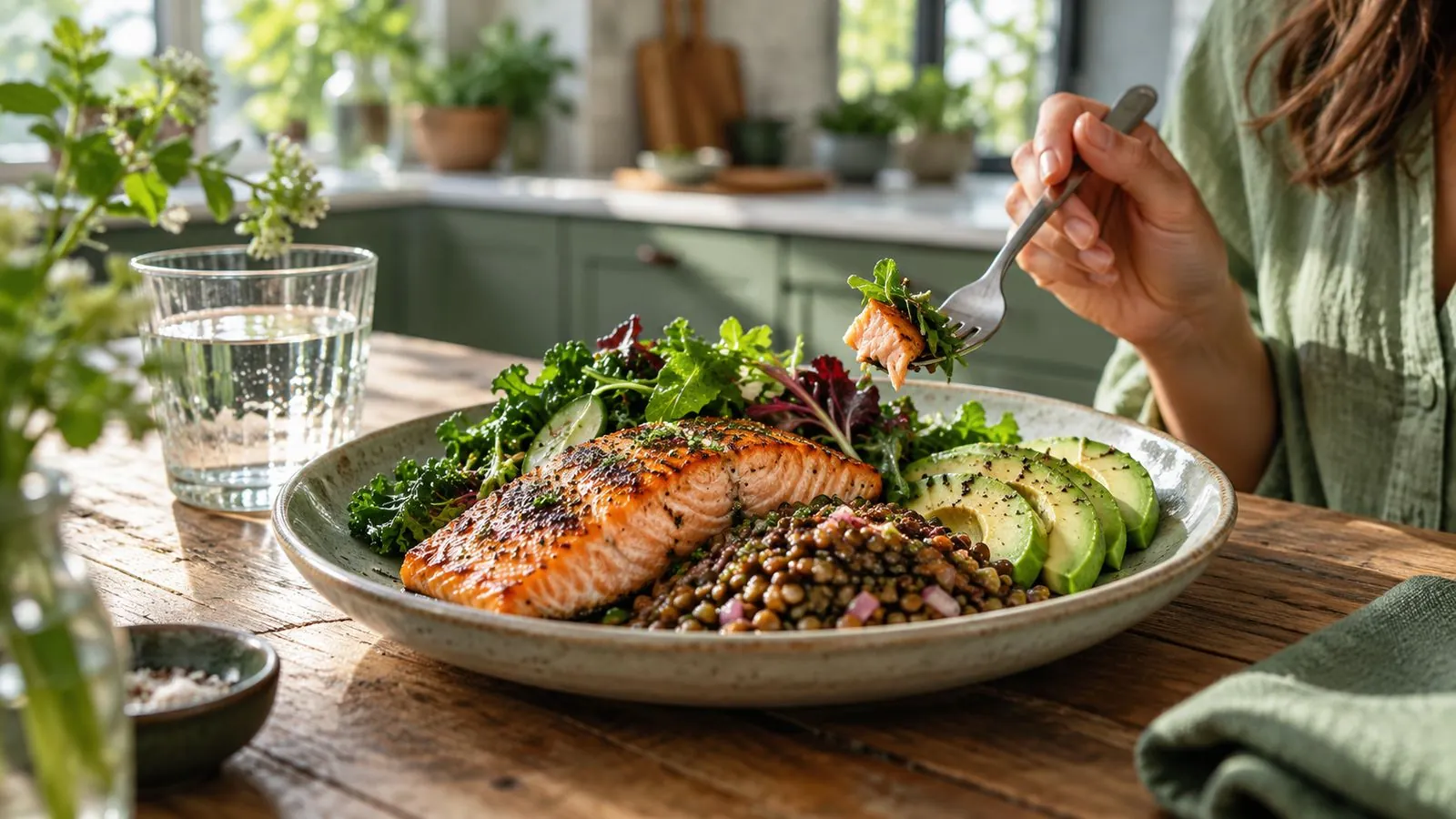
Protein is one of the strongest triggers for fullness hormones. Studies show higher protein meals increase GLP-1 and peptide YY and reduce ghrelin compared with lower protein meals. Aim to include a source of protein, such as eggs, fish, chicken, Greek yogurt, tofu or beans, at every meal.
-
Make room for fiber
Certain fibers, found in foods like oats, beans, lentils, vegetables and fruit, are fermented by the bacteria in your gut. This process produces compounds that research links to the release of GLP-1 and peptide YY. Fiber also slows digestion, which helps keep blood sugar steadier.
-
Eat your vegetables and protein first
The order of your meal may matter. In small studies of adults with type 2 diabetes, eating vegetables and protein before carbohydrates led to lower blood sugar after the meal and higher GLP-1 levels than eating the same foods in reverse order. It is a simple habit that costs nothing to try.
-
Slow down
Fullness hormones take time to rise. One study found that when people ate the same meal over 30 minutes instead of 5, their GLP-1 and peptide YY responses were higher. Putting your fork down between bites gives your gut time to send its message.
-
Choose minimally processed foods most of the time
Whole foods take more work to digest and tend to support fullness signals better than their ultra-processed counterparts. You do not need to be perfect. Shifting the balance is what counts.
-
Protect your sleep
Consistent, quality sleep helps keep hunger and fullness hormones in balance. When sleep suffers, expect cravings to be louder and plan for it.
The Bottom Line
Hunger is not a flaw in your character. It is a sophisticated system of hormonal signals, and GLP-1 is one of its most important players.
You cannot control these hormones directly, but you can influence them. Build meals around protein and fiber, eat slowly, choose whole foods most of the time and give sleep the priority it deserves. Over time, these habits help your body do what it was designed to do: tell you clearly when you have had enough.
Sources (11)
- Cummings DE, et al. A preprandial rise in plasma ghrelin levels suggests a role in meal initiation in humans. Diabetes. 2001;50(8):1714-1719.
- Holst JJ. The physiology of glucagon-like peptide 1. Physiol Rev. 2007;87(4):1409-1439.
- Ludwig DS, et al. High glycemic index foods, overeating, and obesity. Pediatrics. 1999;103(3):e26.
- Ludwig DS. The glycemic index: physiological mechanisms relating to obesity, diabetes, and cardiovascular disease. JAMA. 2002;287(18):2414-2423.
- Hall KD, et al. Ultra-processed diets cause excess calorie intake and weight gain: an inpatient randomized controlled trial of ad libitum food intake. Cell Metab. 2019;30(1):67-77.
- Spiegel K, et al. Sleep curtailment in healthy young men is associated with decreased leptin levels, elevated ghrelin levels, and increased hunger and appetite. Ann Intern Med. 2004;141(11):846-850.
- Lejeune MP, et al. Ghrelin and glucagon-like peptide 1 concentrations, 24-h satiety, and energy and substrate metabolism during a high-protein diet and measured in a respiration chamber. Am J Clin Nutr. 2006;83(1):89-94.
- Batterham RL, et al. Critical role for peptide YY in protein-mediated satiation and body-weight regulation. Cell Metab. 2006;4(3):223-233.
- Chambers ES, et al. Effects of targeted delivery of propionate to the human colon on appetite regulation, body weight maintenance and adiposity in overweight adults. Gut. 2015;64(11):1744-1754.
- Shukla AP, et al. Carbohydrate-last meal pattern lowers postprandial glucose and insulin excursions in type 2 diabetes. BMJ Open Diabetes Res Care. 2017;5(1):e000440.
- Kokkinos A, et al. Eating slowly increases the postprandial response of the anorexigenic gut hormones, peptide YY and glucagon-like peptide-1. J Clin Endocrinol Metab. 2010;95(1):333-337.
Disclaimer: This article is for informational purposes only and is not a substitute for professional medical advice. If you have diabetes or take medication that affects blood sugar, talk to your doctor before changing your diet.