
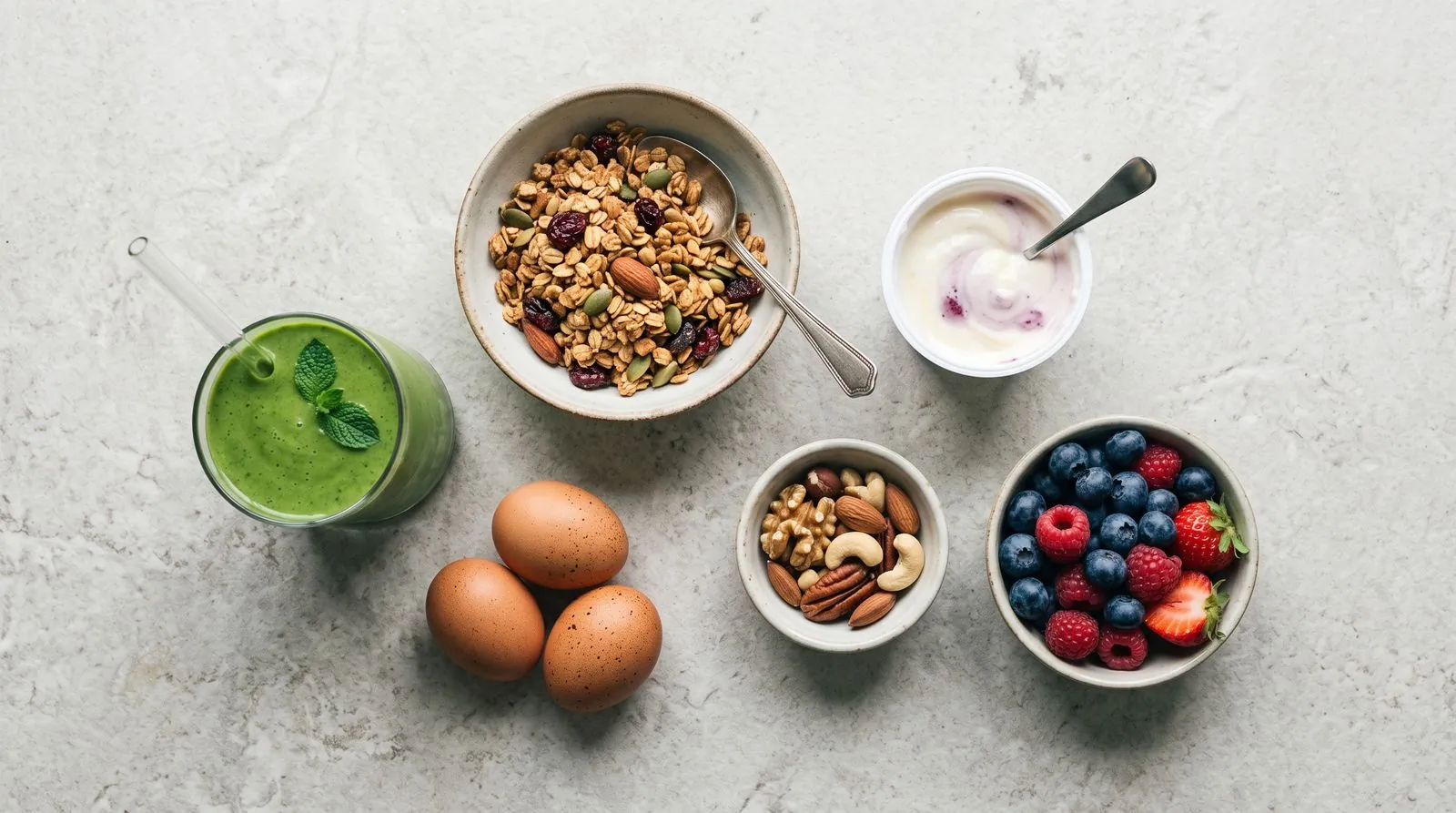
You are doing your best. You grab the granola instead of the donut, the low fat yogurt instead of the ice cream, the fruit smoothie instead of the soda.
But nutrition advice has changed a lot over the years, and food marketing has become very good at making products look healthier than they are. At the same time, some foods that were once labeled “bad” have been cleared by newer research.
The result is a lot of confusion at the grocery store. Let’s clear some of it up.
Granola is always a healthy breakfast.
Many store bought granolas are closer to dessert than you might expect.
Granola has a wholesome image: oats, nuts, seeds, maybe some dried fruit. And homemade or lightly sweetened versions can be a great choice.
But many commercial granolas are bound together with honey, syrups and oils, which can add several teaspoons of sugar per serving. Serving sizes on the label are often small, sometimes a quarter or half cup, which is far less than most people pour into a bowl.
For context, the American Heart Association recommends limiting added sugar to about 6 teaspoons a day for most women and 9 teaspoons a day for most men.
Check the “Added Sugars” line on the label, measure a serving once to see what it looks like, and use granola as a crunchy topping on plain yogurt rather than the whole meal.
Fruit juice and smoothies count the same as whole fruit.
How you eat your fruit matters.
Whole fruit comes packaged with fiber and structure that slow down how quickly its natural sugars reach your bloodstream. It also takes time to chew, which gives your body a chance to register fullness.
Juicing removes most of that fiber. In a large study that followed more than 180,000 adults for years, eating more whole fruits, especially blueberries, grapes and apples, was linked to a lower risk of type 2 diabetes. Drinking more fruit juice was linked to a higher risk.
Smoothies fall somewhere in between. Blending keeps the fiber, but it is easy to drink the equivalent of three or four pieces of fruit in a few minutes, especially if the base is juice.
Choose whole fruit most of the time. If you love smoothies, use water or unsweetened milk as the base, go heavier on greens than fruit and add protein, like Greek yogurt, to make it more filling.
Eggs are bad for your heart.
For most healthy people, eating eggs in moderation is not linked to heart disease.
For decades, eggs were considered risky because of their cholesterol content. But research has shown that for most people, the cholesterol you eat has a smaller effect on blood cholesterol than once believed.
A large analysis combining data from three long running U.S. studies and other research worldwide found that eating up to about one egg a day was not associated with a higher risk of cardiovascular disease in most people. The American Heart Association has noted that healthy individuals can include up to one egg a day as part of a healthy diet.
Eggs are also an affordable source of high quality protein, which helps you stay full.
Enjoy eggs as part of a balanced meal. What you eat alongside them, like vegetables versus processed meats, matters too. If you have diabetes or high cholesterol, ask your doctor what makes sense for you.
The front of the package is marketing. The nutrition label is where the real story lives.
Nuts are too fattening to eat regularly.
Nuts are high in calories, but research links them to better health, not weight gain.
It is true that nuts are calorie dense. But they also provide healthy fats, protein, fiber and minerals, and they are very filling.
In a large clinical trial in Spain, people following a Mediterranean diet supplemented with a daily handful of mixed nuts had a lower rate of major cardiovascular events than those following a reduced fat diet. And a review of clinical trials found that adding nuts to the diet did not lead to weight gain.
Enjoy a small handful, about one ounce, of unsalted nuts most days. Choose them instead of chips or crackers, not in addition to them.
Low fat and “light” products are the healthier choice.
When fat is removed, sugar is often added.
Fat carries a lot of flavor. When manufacturers remove it, they often make up the difference with sugar or starch.
A study comparing hundreds of foods found that low fat and nonfat versions often contained more sugar than their regular counterparts. Flavored low fat yogurts are a common example. Some contain as much added sugar as a dessert.
Compare labels rather than relying on the front of the package. Plain yogurt, either regular or low fat, with fresh fruit and a sprinkle of nuts is usually a better choice than a pre-flavored version.
Eating healthy means cutting out carbs completely.
The quality of your carbohydrates matters more than avoiding them altogether.
Refined carbohydrates, like white bread, pastries and sugary drinks, can cause fast swings in blood sugar. But whole grains, beans, lentils, vegetables and fruit are also carbohydrates, and they come with fiber and nutrients.
A major review commissioned by the World Health Organization found that people who ate the most fiber and whole grains had lower rates of heart disease, type 2 diabetes and early death than those who ate the least.
And when it comes to weight, a large one year trial found that people following a healthy low carb diet and people following a healthy low fat diet lost similar amounts of weight. Both groups focused on whole foods and cut back on added sugar and refined grains. (We explore why in Why Your Body Fights Weight Loss.)
Rather than eliminating carbs, trade refined carbs for fiber rich ones, and pair them with protein to keep blood sugar steadier.
“Natural,” “multigrain” and “made with real fruit” mean it is healthy.
These front of package claims can be misleading.
The U.S. Food and Drug Administration has not established a formal definition for the word “natural” on food labels. It generally means nothing artificial or synthetic was added, but it says nothing about sugar, salt or overall nutrition.
“Multigrain” simply means a product contains more than one type of grain. Those grains may be refined, not whole. And “made with real fruit” can apply to products that contain only a small amount of fruit.
Flip the package over. Look for “whole” before the first grain in the ingredient list, and check the Added Sugars line and fiber content on the Nutrition Facts label.
A Quick Guide to Reading Labels
When you are standing in the grocery aisle, these checks take less than a minute:
- Start with the serving size. Everything else on the label is based on it.
- Check “Added Sugars.” Lower is better. Remember the daily limit of about 6 to 9 teaspoons.
- Look at the fiber. Foods with 3 grams or more per serving are a solid choice.
- Scan the first few ingredients. Ingredients are listed from most to least. If sugar or refined flour comes first, think twice.
- Compare similar products. Two granolas or two yogurts can be very different.
The Bottom Line
Eating well does not require perfection or a list of forbidden foods. It starts with looking past the marketing and paying attention to what is actually in your food.
Choose whole fruit over juice, plain over flavored, whole grains over refined, and do not be afraid of eggs and nuts. Most of all, make the nutrition label your guide. Small, informed swaps add up to big differences over time.
Sources (10)
- Johnson RK, et al. Dietary sugars intake and cardiovascular health: a scientific statement from the American Heart Association. Circulation. 2009;120(11):1011-1020.
- Muraki I, et al. Fruit consumption and risk of type 2 diabetes: results from three prospective longitudinal cohort studies. BMJ. 2013;347:f5001.
- Drouin-Chartier JP, et al. Egg consumption and risk of cardiovascular disease: three large prospective US cohort studies, systematic review, and updated meta-analysis. BMJ. 2020;368:m513.
- Carson JAS, et al. Dietary cholesterol and cardiovascular risk: a science advisory from the American Heart Association. Circulation. 2020;141(3):e39-e53.
- Estruch R, et al. Primary prevention of cardiovascular disease with a Mediterranean diet supplemented with extra-virgin olive oil or nuts. N Engl J Med. 2018;378(25):e34.
- Flores-Mateo G, et al. Nut intake and adiposity: meta-analysis of clinical trials. Am J Clin Nutr. 2013;97(6):1346-1355.
- Nguyen PK, Lin S, Heidenreich P. A systematic comparison of sugar content in low-fat vs regular versions of food. Nutr Diabetes. 2016;6(1):e193.
- Reynolds A, et al. Carbohydrate quality and human health: a series of systematic reviews and meta-analyses. Lancet. 2019;393(10170):434-445.
- Gardner CD, et al. Effect of low-fat vs low-carbohydrate diet on 12-month weight loss in overweight adults and the association with genotype pattern or insulin secretion: the DIETFITS randomized clinical trial. JAMA. 2018;319(7):667-679.
- U.S. Food and Drug Administration. Use of the term “natural” on food labeling.
Disclaimer: This article is for informational purposes only and is not a substitute for professional medical or nutritional advice. If you have a health condition, talk to your doctor or a registered dietitian before making significant changes to your diet.